
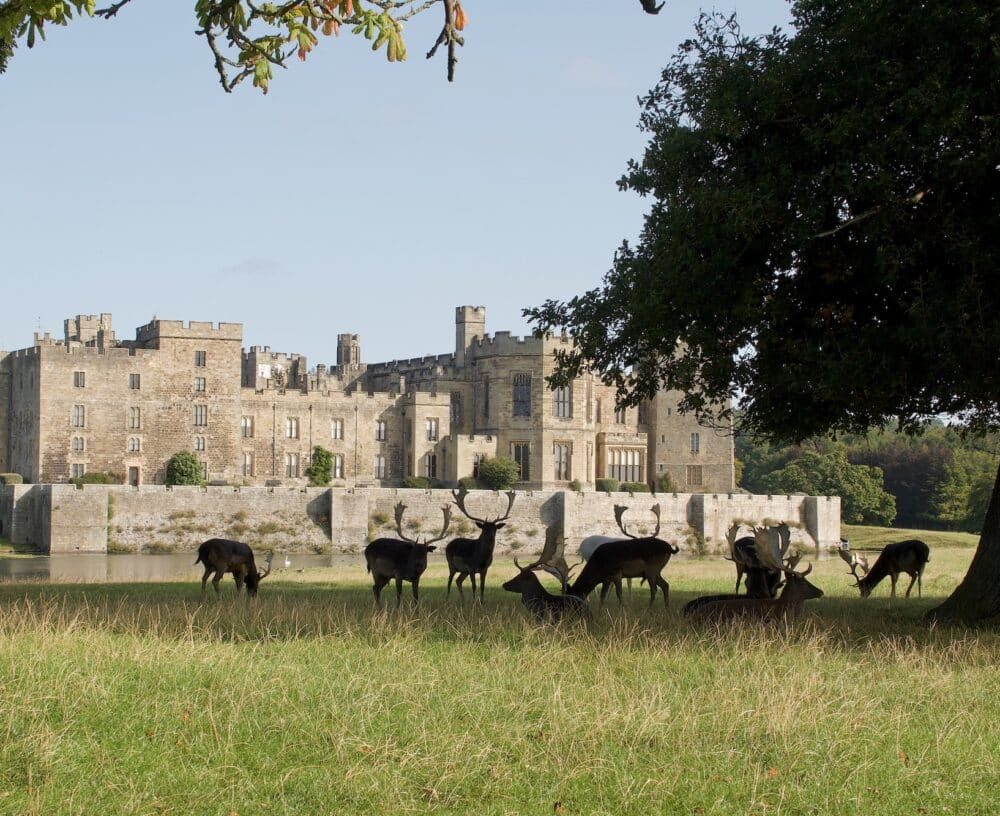
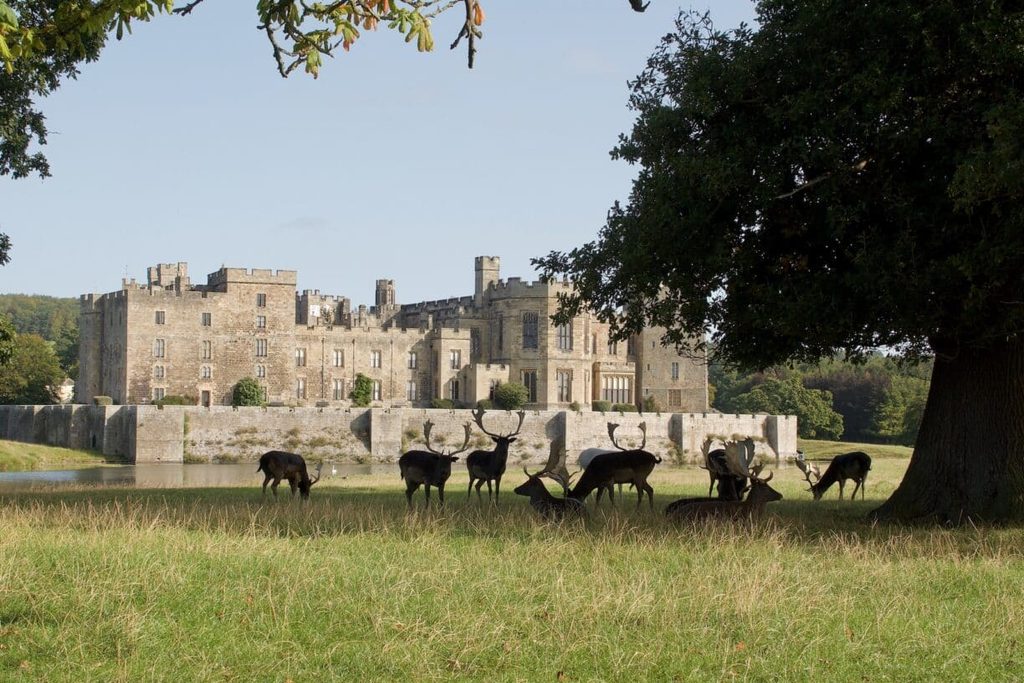
Raby Castle is one of those places that comes at you from afar, filling you with awe as you approach. It appears from the trees as a monument on the skyline, getting bigger and more imposing, doing exactly what it was meant to do; to dominate, to defend, and to delight. These castles were military strongholds before they were places of leisure, and this juxtaposition is seen beautifully at Raby where its ten-foot-thick walls surround exquisite furniture and paintings by old masters. The places where the Medieval stands cheek-by-jowl with the Stuart, Georgian, and Victorian are – in my opinion – some of the most fascinating, as they show how these incredible buildings changes and developed over time, as well as providing hints of their exciting histories.
Raby has a fascinating near-seven-hundred-year story, and is entwined with some of the most dramatic moments and personalities found in England’s history. As such, let’s go on a deep dive about Raby…
A Military Stronghold (c. 1360-1400)
The reason many Northern castles were built was to dominate the local landscape and to provide bastions of royal control in areas prone to domestic uprisings and international invasions. In my article about Richmond and Middleham, we learned how they were both built initially as strongholds of Norman power in the North, to subdue the local populace in the name of the newly established dynasty. Raby is a little different. By the time Raby was built in the mid-fourteenth century, the invasion was centuries old history, and whilst rebellion and uprisings were still fairly common (as we shall see), the castle was not purposefully being built to subjugate a domestic population.
Instead, the main problem in this part of the world in the mid-fourteenth century was the Scots. These invaders from the North could come pouring over the border in moments of weakness in the English state, so it was essential that these bastions existed as a place to retreat to and defend. As such, Raby Castle was built by John Neville, 3rd Baron Neville de Raby who was named Warden of the Marches – an office that existed to ensure the security of the border between England and Scotland (“the Marches”) – and which often required the postholder to engage in military action. John was no stranger to fighting against the Scots, and was considered to be a hero of the Battle of Neville’s Cross that took place a handful of miles North of where Raby stands. In 1378, the Bishop of Durham (who had kinglike powers in this part of the world) gave John permission to crenellate (i.e. fortify) the castle. This was the beginning of the astronomic rise to power of the Neville family and Raby as we see it today.
A King(maker) in the North (1400-1560)
When one thinks about a Neville Kingmaker, one thinks of Richard Neville, Earl of Warwick. In fact, the Nevilles of Raby were getting involved in “Kingmaking” decades before he came along. In the last years of the fourteenth century, Ralph Neville (son of the above John) was created Earl of Westmorland by Richard II as a reward for his loyalty. Yet, only a handful of years later, Ralph sided with Henry Bolingbroke and was one of the nobles who persuaded Richard II to abdicate his crown. It is one of those wonderful ironies of history that whilst Ralph was a key player in bringing the first Lancastrian King (Henry IV) to the throne, his son and grandson would become leaders of the Yorkist faction during the Wars of the Roses that erupted in the 1450s.
Enjoying this article? Enter your email address below and confirm when the follow-up email arrives in your mailbox! You will then receive a regular newsletter with all things Northern, directly to your inbox. Thank you!
Of course, Raby isn’t all about the men who lived within its walls, and during these years two of the most interesting residents of the castle: Joan Beaufort and Cecily Neville (“The Rose of Raby”) also called the castle home. Joan was the legitimised daughter of John of Gaunt and Katherine Swynford. She married Ralph in 1396, and presented him with fourteen(!) children, ten of whom survived infancy. Several of these children would go on to sire dynasties of their own, but it was Cecily, the youngest, who took the crowning glory (literally) in this respect. Cecily was born at Raby and, following her marriage to Richard, Duke of York, would go on to become mother to Edward IV and Richard III. The Neville family were no longer just a powerful family supporting royalty, they were royalty and Raby was one of their glittering seats of power in their Northern stronghold.
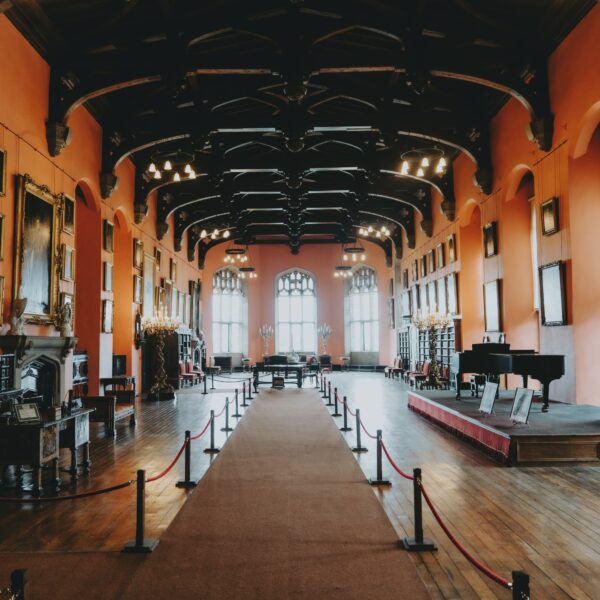
But, of course, what goes up, must come down. Following the defeat of the Yorkists and the ascent of the Tudor Dynasty at the end of the Wars of the Roses, the Nevilles found themselves, once again, as supporting players rather than the main character. For a handful of generations, the Nevilles of Raby played ball with the Tudors, enjoying their status as a powerful Northern family. But, by the 1560s, things had reached a boiling point. The Nevilles were Catholic, and Elizabeth I, quite famously, was not. This was a problem for Charles Neville, and the solution that he reached for was to foment a rebellion against Elizabeth in favour of her Catholic cousin, Mary, Queen of Scots. The subsequent ‘Rising of the North’ saw Raby Castle become a centre of unrest, as up to eight-hundred rebels gathered in the magnificent Baron’s Hall to plot and organise their attempted coup.
The Rebellion failed. Charles was forced to flee overseas as many of his fellow plotters were rounded up and executed. An Act of Attainder was passed against him, forfeiting all his lands to the crown, and he died in penury in Flanders. Nearly two hundred years exactly since construction begun, Raby Castle was taken from Neville hands and, for the next forty years, belonged to the Crown.
A Palace in the Park (1600-1850)
Many of the alterations that made Raby into the castle we see today happened under the next dynasty of owners. In the early seventeenth century, the property was bought by Henry Vane the Elder, who also owned nearby Barnard Castle, and used stone from that castle in order to renovate and update Raby to their liking.
Like their Neville predecessors, the Vanes were no strangers to political manouevering, and whilst Henry Vane the Elder found success in the court of Charles I; his son Henry Vane the Younger was a leading Parliamentarian who supported Oliver Cromwell. Following the restoration of Charles II, he would lose his head for his treason.
Arguably the most dangerous period for Raby came with the next generation. Christopher Vane (son of the treasonous Henry) married Elizabeth Holles, a woman who was apparently known for her formidable temper; so much so that she would go on to be nicknamed “Old Hell-Cat.” This nickname wasn’t entirely unfounded because she, along with her husband, nearly brought about the destruction of Raby Castle. This was done as an act of spite (although I’m sure that they thought they were being perfectly reasonable!), when their son Gilbert Vane decided he wanted to marry Mary Randyll, the untitled daughter of a mere MP. Christopher and Elizabeth were horrified that Gilbert wasn’t marrying an aristocrat and moved to completely destroy his Raby inheritance.
In 1714, on Christopher’s instruction, Raby was gutted. The floors were taken up, the windows removed, the deer in the park were destroyed, the trees were cut down, the lead was taken off the roof, and the furniture was flitted away. All this because Gilbert had married someone with no title! This led to a drawn out legal battle which Gilbert thankfully won, and his parents were forced to pay thousands of pounds in damages so that he could restore Raby to its former glory.
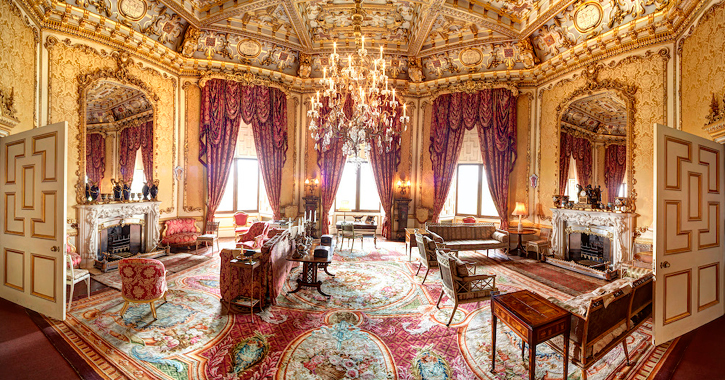
It was in the centuries that followed that Raby became the jewel that it is today. No expense was spared in the design and decoration of the castle over the next one-hundred-and-fifty years, and beautiful furniture, paintings, sculpture, and antiques were brought to Raby, making it a must-see destination for art lovers. It was during this period that the stunning Octagon Drawing Room was built by the newly created Duke of Cleveland. This is a room that makes your jaw drop when you walk in. According to the guide, the Duchess (who was in charge of renovations) asked the architect for a room that “wouldn’t look out of place in Versailles.” I think he nailed it.
Raby Today
Today Raby is still owned by the Vane family, the Barons Barnard, although they no longer hold the title of the Dukes of Cleveland, as that title died out in 1890. Sympathetic restoration and renovation was carried out by the 11th Baron in the 1960s, and Raby Castle has been welcoming the general public to learn all about the history, art, and architecture of this incredible building for decades.
Major additional works were undertaken in the early 2020s to supplement the visitor experience, including the building of an extensive new restaurant, shop, exhibition spaces, and a bespoke children’s adventure area called “The Plotters Forest.” These transformational works mean that the castle and the estate can be maintained and enjoyed for many generations to come.


